

Beware of the power of the anchor if you’re negotiating, whether it’s your salary, or the price of a product or service.
An anchor is a reference point that your mind will use to make decisions and is often the first ‘offer’ that’s voiced or read. It’s called an anchor because it will weigh you down. It will tether you to a particular reference point, like a boat is tethered to a spot in the ocean. Even if you rationally know that the offer is way out of the range it should be, it will still subconsciously have influence over you.
Car salesmen are the masters of the anchor
Car salesmen are well known for using anchors to start negotiations. They usually start with asking for a higher price, so that when they eventually reduce the price during negotiations, you’ll feel like you are getting a better deal. The original, higher price is the anchor and subconsciously you will set your expectations around that initial price point.
We have this anchoring bias to help us make decisions more quickly, but it can unfortunately also lead to poor decisions.
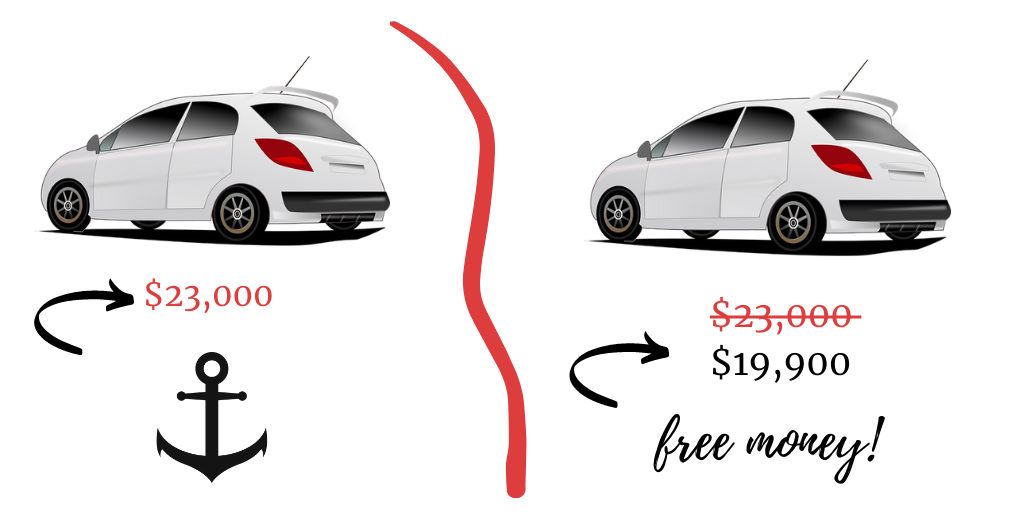
How to overcome (or use) the anchoring bias
One way to overcome the anchoring bias is to make the first offer yourself – you set the anchor, rather than your negotiating partner. If you’re afraid of pricing yourself or your product out of the market, you can always go with a broader range rather than a single figure.
If you don’t get in first, it’s really important to recognise the anchor and defuse it! This means you let the other party know that the offer is unacceptable to you – be firm about this – and then you need to very quickly make a counter proposal. Try not to repeat the anchor at all as this can unfortunately help it stick further in your mind.
You can of course also leverage the power of the anchor to get a better price for your own product or service. Get in first with the offer, or set a higher initial price to help anchor your prospects. But be wary of overusing this technique. If your customers get used to always getting a discount on the advertised price, the effect will lose its shine pretty quickly and can box you into a continual discounting cycle – so use it sparingly!
Leave a Reply