As we’ve become more cashless this year than ever before, we’ve inadvertently reduced our overall “pain of paying”. This is great news for companies selling products or services. But it has consequences for keeping our spending in check. Plus cash versus card is only one of many factors that influence the pain of paying.

What is the “pain of paying”?
The pain of paying refers to the generally negative emotions that humans experience when they pay for a good or service. We are a loss averse species and handing over money can feel like losing money. Of course as always there’s a spectrum, with some of us more sensitive to this pain than others. Some behavioural economists call it the difference between ‘tightwads’ and ‘spendthrifts’. My husband calls it my travel addiction ;-)!
As a business your interest is likely to be to decrease the pain of paying for your customers so that they feel better about their purchase and so are more likely to buy again, or to recommend your business to others. But as a consumer you may wish to increase that pain of paying so that you have stronger willpower and control over your spending habits and can step away from the online shopping basket!
Test your own pain of paying
Imagine the following scenarios and think about how painful, or not, it would be for you personally to pay in each instance.
- You’ve enjoyed a week away at a five star resort and participated in lots of activities, meals etc that you charged to your room. Then you receive the total bill on checkout.
- You’re eating at a sushi train restaurant and every time you pick a plate off the conveyer belt, your table bill, which is displayed on a screen at your table, makes a beeping noise and immediately increases with the cost of the plate you’ve just taken off the conveyer belt.
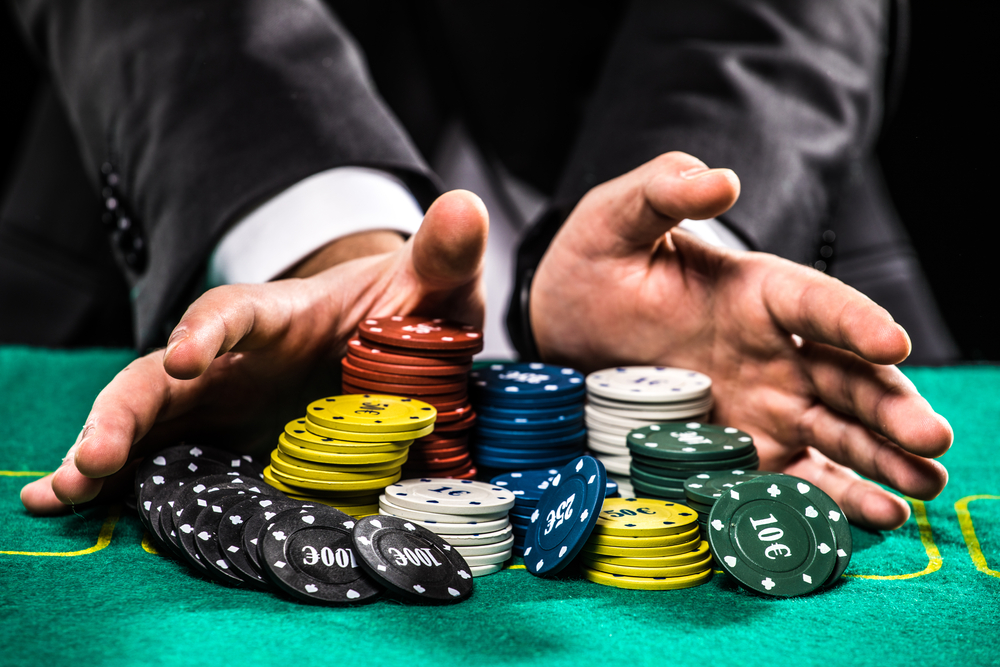
- You go to the casino and use your debit card to buy some casino chips. You then spend the evening winning and losing the chips. You end up with fewer chips than you started with by the end of the evening when you cash out.
- Your wife buys you the beautiful, expensive wristwatch you admired a few weeks ago and decided you really couldn’t justify buying – using your joint credit card.
If you felt the pain of paying in these scenarios would be 1) higher, 2) higher, 3) lower, 4) lower, you are on the money (pardon the pun).
Cheat Sheet for the Pain of Paying
There are a range of factors that influence the pain of paying, including:
- Whether you pay by cash, credit, or some other format (like casino chips)
- Whether you pay before, during or after an experience
- If and when you’re reminded about the payment
- Whether you pay, or someone else pays on your behalf (even though you may be using the same source of money)
- The reference point or anchor that you’re comparing the amount of the payment to also plays a role
- Whether or not the payment has an element of doing good for others attached to it
Here’s a quick guide to get you started (you can download the PDF version below too):
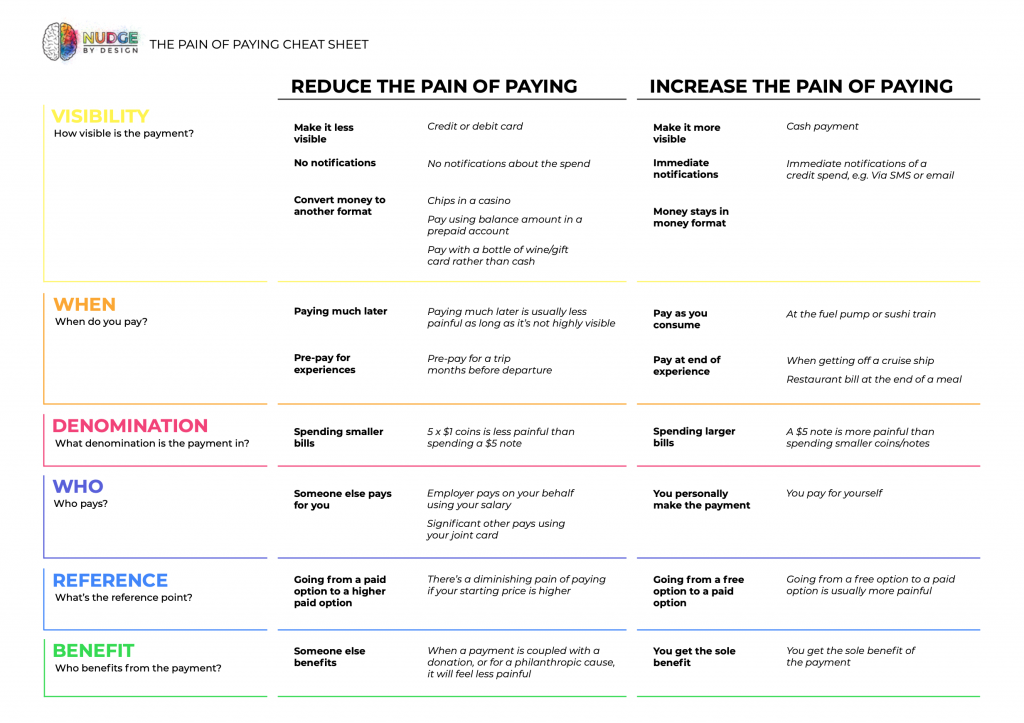
So here you have plenty of ways to either increase or decrease the pain of paying based on behavioural science principles and research!
Leave a Reply